Do Guinea Pigs Hibernate? Your Winter Care Guide
Published on: February 9, 2026 | Last Updated: February 9, 2026
Written By: Kate M. Callahan
Hello CavyFam! Are you worried your guinea pig might try to hibernate as the weather turns chilly? This fear pops up for many pet owners when winter arrives, but the answer isn’t what you might expect.
I’ll break down everything you need to know, covering:
- Whether guinea pigs truly hibernate or not
- Key signs of winter health issues
- Simple steps to keep your pet warm and active
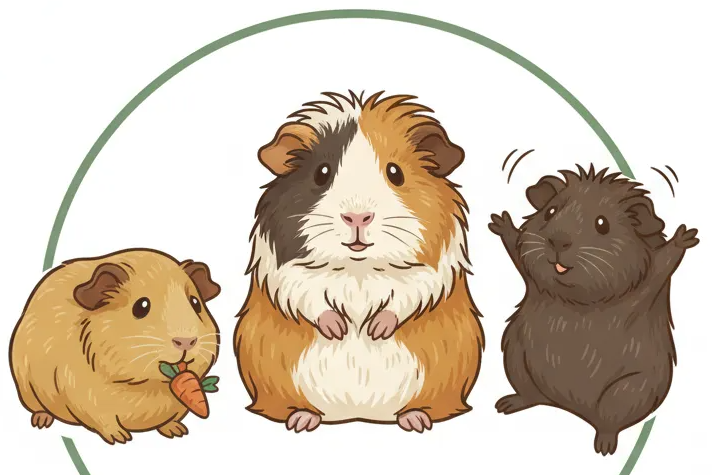
Having cared for my guinea pigs Pepper, Clover, and Biscuit through multiple winters, I can share firsthand tips to protect your furry friend.
Understanding Guinea Pig Hibernation
Guinea pigs do not hibernate, which might surprise you if you’ve seen other small animals slow down in winter. Their bodies are not built for hibernation, so they stay active and need consistent care all year. I’ve watched my guinea pigs, like gentle Pepper and graceful Clover, remain lively even on chilly days, showing no signs of dormancy.
Hibernation is a deep sleep some animals enter to conserve energy in cold months, but guinea pigs come from warmer climates where this wasn’t necessary. Keeping them warm and engaged prevents stress and health issues, as I’ve learned through caring for my own pets. If your guinea pig seems lethargic in cold weather, it’s likely a sign of illness, not natural rest. Note on “freeze”: it’s not hibernation—when a guinea pig stops moving, it can signal fear, pain, or illness. Decoding freeze means recognizing this stop in motion as a red flag requiring your attention.
- Guinea pigs maintain a steady metabolism year-round.
- They rely on external warmth since they can’t regulate body temperature like hibernators.
- Regular feeding and interaction are crucial, as I ensure with reserved Biscuit.
Why Cold Weather Poses a Serious Risk
Cold weather can be dangerous for guinea pigs because they’re prone to hypothermia and respiratory infections. Exposure to low temperatures weakens their immune system, making them vulnerable to sickness. I’ve noticed that even a slight draft can cause my guinea pigs to shiver, so I always check their living area for insulation.
Their small size means they lose heat quickly, and without proper protection, they might stop eating or become lethargic. Providing a cozy habitat with extra bedding and avoiding sudden temperature drops has kept my pets safe and healthy. For example, I use fleece liners and place their cage away from windows during winter months.
- Monitor room temperature-keep it above 65°F (18°C) to prevent chilling.
- Add warm hiding spots, like small huts filled with hay, as I do for intelligent Biscuit.
- Increase high-fiber foods to help maintain body heat through digestion.
Guinea pigs can suffer from frostbite on their ears and feet if left in cold conditions. Regularly inspecting their body for pale or cold spots helps catch issues early, a habit I’ve developed with my own herd. Always prioritize their comfort to avoid emergencies, and consult a vet if you notice unusual behavior. In summer, keep them cool and brush regularly to prevent overheating; for more tips, check out this guide. In winter, add warmth and keep fur dry to prevent cold stress.
Recognizing the Signs of Cold Stress
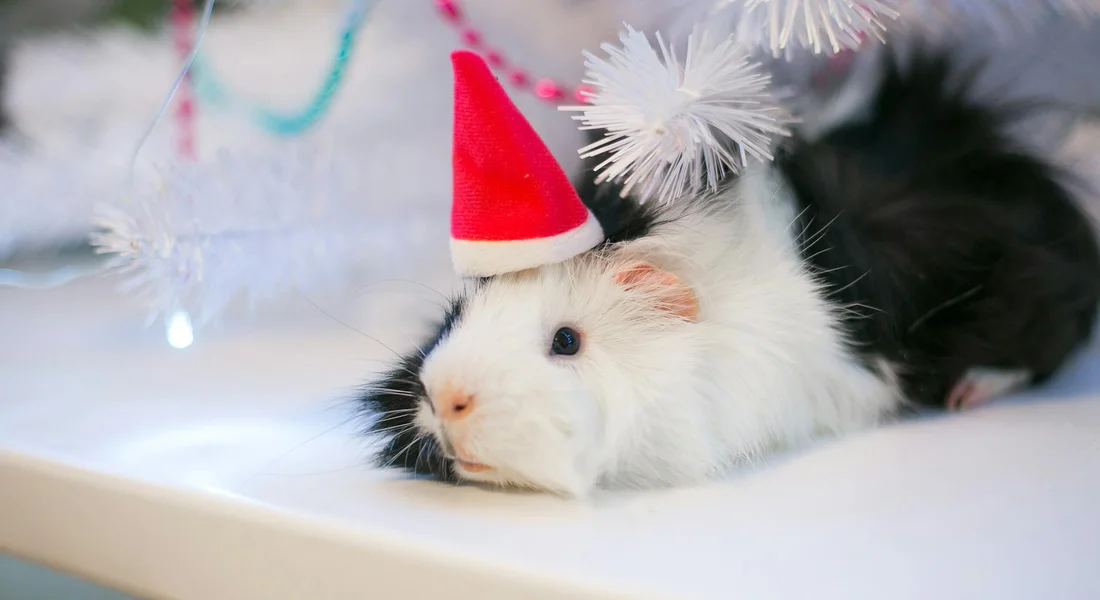
When temperatures drop, your guinea pig might show subtle changes that signal discomfort. Watch for shivering, huddling in corners, or a noticeable drop in appetite, as these are early warnings of cold stress. I’ve seen this with my own guinea pigs, like gentle Pepper, who tends to curl up tightly when the room feels chilly. Their little bodies aren’t built for low temperatures, so acting quickly can prevent bigger health issues. Additionally, it’s important to recognize signs of stress or anxiety in your cavy for their overall well-being.
Is It Lethargy or Something More Serious?
Lethargy in guinea pigs can be tricky to interpret, especially in winter. If your pet is just resting more but still eats and moves normally, it might be fine; but if they refuse food or seem weak, it could point to hypothermia or illness. From caring for thoughtful Clover, I’ve learned to check their ears-cold ears often mean they’re too cold. Here’s a simple list to help you decide:
- Normal behavior: Occasional napping, responsive to sounds, steady eating habits.
- Concerning signs: Persistent stillness, ignoring favorite veggies, labored breathing.
- Action steps: Feel their body for warmth, offer a warm hideout, and consult a vet if unsure.
Trust your instincts-you know your pet best, and early intervention keeps them safe and cozy.
The Ideal Winter Habitat Setup
Creating a warm, draft-free space is key to your guinea pig’s comfort in cold weather. A well-insulated cage reduces the risk of cold stress and supports their natural activity levels. I’ve set up habitats for all my pigs, and it makes a huge difference in their happiness, especially for reserved Biscuit who appreciates a snug environment. If you’re aiming to build the perfect guinea pig cage, prioritize space, ventilation, and easy-to-clean surfaces.
Choosing the Right Bedding for Insulation
Bedding isn’t just for cleanliness-it’s a vital insulator against the cold. Opt for materials like fleece liners or aspen shavings, which trap heat better than thin paper bedding. In my experience, fleece works wonders for my Peruvian Biscuit’s long fur, keeping him warm without irritating his skin. Avoid cedar shavings, as the oils can harm their respiratory system. Here are some top choices:
- Fleece: Reusable, soft, and excellent for heat retention; wash it weekly to stay fresh.
- Aspen shavings: Natural, absorbent, and affordable; change them every few days to prevent dampness.
- Paper-based bedding: Dust-free and cozy; ideal for sensitive pigs like graceful Clover.
Layering bedding deeply helps create a warm burrow-like feel they’ll love.
Safe Heating Solutions for Your Pet’s Cage
Heating your guinea pig’s space requires caution to avoid burns or fires. Use pet-safe heat pads or microwavable disks placed under part of the cage, so your pig can move away if too warm. It’s especially important to keep them warm during colder months to prevent any health issues. I always test heat sources with my hand first to ensure they’re not scalding. Steer clear of heat lamps or electric blankets, which pose serious risks. For a simple fix, try this step-by-step approach:
- Wrap a heat pad in a towel and place it under one side of the cage floor.
- Monitor the temperature-aim for a steady 65-75°F (18-24°C) in the room.
- Add extra hideouts filled with hay for natural insulation and comfort.
Regular checks ensure your furry friend stays toasty without any dangers.
Adjusting Daily Care for Winter Months
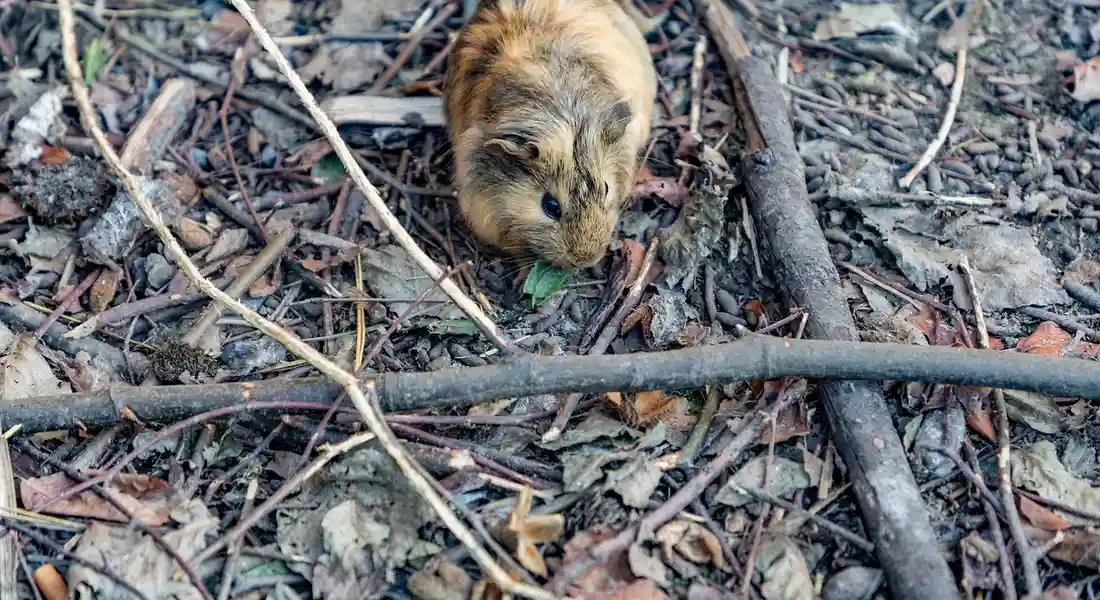
Winter demands a few thoughtful tweaks to your guinea pig’s routine to keep them cozy and healthy. I always move my herd’s cage away from drafty windows and doors, as even a slight chill can stress their sensitive systems. You’ll notice your pets huddling more, which is their natural way to share warmth. To support their guinea pig temperature needs, keep the room steady and within a guinea pig–friendly range (roughly 65–75°F / 18–24°C). If temperatures fall below this, consider safe, gentle heating to maintain warmth.
Warmth and Comfort Strategies
Guinea pigs feel temperature changes acutely. A stable, warm environment prevents health issues.
- Provide extra hay for burrowing; I watch Pepper and Biscuit tunnel into fresh piles with delight.
- Use fleece cage liners instead of loose bedding-they retain heat better and are softer on tiny feet.
- Place a small, pet-safe heat pad (set on low) under one corner of the habitat, so they can choose to use it.
- Cover part of the cage with a breathable blanket at night to trap warmth, but ensure ample ventilation remains.
Diet and Hydration Focus
Your guinea pigs need more calories in winter to maintain body heat, just like we do. Understanding their daily calorie requirements helps you tailor portions to keep them at a healthy weight. I increase their daily pellet portion slightly and always include vitamin C-rich veggies like bell peppers to support their immune system. Fresh water is critical; check bottles twice daily since metal spouts can freeze in colder rooms.
- Offer slightly warmed water to encourage drinking.
- Serve vegetables at room temperature, not straight from the fridge.
- Monitor their weight weekly; a small kitchen scale works perfectly for this.
When to Seek Immediate Veterinary Advice
Guinea pigs hide illness well, especially in winter. Any sign of lethargy or changes in behavior warrants a vet visit. Trust your instincts—if something feels off, it’s better to be safe and get professional advice quickly. During a health check, handle your guinea pig gently and securely to prevent stress or escapes. Use a soft grip, support their hind end, and speak softly to keep them calm. I learned this when Clover became unusually quiet one chilly afternoon; a prompt check-up caught a minor respiratory issue early.
Critical Warning Signs
These symptoms indicate potential emergencies. Don’t wait to see if they improve on their own.
- Labored breathing, wheezing, or discharge from nose/eyes
- Refusal to eat or drink for more than a few hours
- Lethargy so pronounced they don’t react to favorite treats or sounds
- Hunched posture with puffed-up fur, often accompanied by shivering
- Diarrhea or noticeably smaller, drier droppings
Having an emergency vet’s number saved in your phone provides peace of mind during unpredictable weather. Quick action can make all the difference for these small, fragile animals we love so much.
FAQs

Do guinea pigs ever hibernate like other small animals?
No, guinea pigs do not hibernate due to their physiological makeup. Any signs of dormancy in cold weather typically indicate health problems like hypothermia.
How does winter affect guinea pigs if they don’t hibernate?
Winter can cause cold stress, leading to issues like shivering or reduced appetite. Providing a warm, draft-free habitat helps maintain their activity and health.
What temperature is unsafe for guinea pigs in winter?
Temperatures below 65°F (18°C) pose risks such as respiratory infections or hypothermia. Consistently monitoring their environment prevents these dangers.
When are guinea pigs most at risk from cold exposure?
They are most vulnerable during the coldest months, from late autumn to early spring. Regular checks and adjustments to their care are crucial in this period.
Can guinea pigs enter a hibernation-like state if temperatures drop suddenly?
Guinea pigs never enter hibernation, even with rapid temperature changes. Sudden lethargy or weakness should be treated as a potential emergency. If you’re worried your guinea pig is dying or showing critical signs, seek emergency veterinary care immediately. Remember, guinea pigs do not hibernate, so abrupt symptoms like not eating, extreme weakness, or a cold body are urgent red flags.
Your Guinea Pig’s Winter Wellness Guide
Guinea pigs, such as my gentle Pepper and thoughtful Clover, never hibernate and depend on consistent warmth and attentive care during colder months. Focus on keeping their environment draft-free and cozy, with temperatures steady above 65°F to prevent health issues.
Embrace responsible pet ownership by always seeking new, eco-friendly ways to care for your pets, like using sustainable bedding or safe, natural toys. Proper guinea pig care also means a clean, spacious cage, daily fresh hay and water, and gentle handling. Regular health checks and mental enrichment help keep your guinea pig thriving. Staying curious and informed helps you provide a loving, healthy home that supports both your guinea pig and our planet.
Further Reading & Sources
- How to Care for Guinea Pigs in Winter
- Do Guinea Pigs Hibernate? Sleep Patterns & More – HayDay HQ
- Do Guinea Pigs Hibernate? – GuineaDad
- Fact or Fiction: Do Guinea Pigs Hibernate? | Small Pet Select Blogs | Small Pet Select
Kate is a passionate guinea pig owner and advocate for small pet welfare. With over a decade of experience caring for guinea pigs, she has become a trusted voice in the small pet community.
Uncategorized